
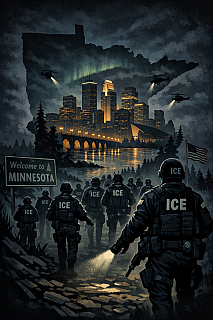
The Invasion of Minneapolis

Published: February 12, 2026 •
2 min read
When federal immigration agents flooded the Twin Cities in early 2026, the government called it enforcement. Locals called it something else: an invasion.
The deployment—part of the Trump administration’s massive immigration crackdown—sent thousands of federal agents into Minneapolis and St. Paul in what officials described as the largest immigration operation ever staged in the region. At its peak, more than 3,000 federal agents were operating across the metro area, a force larger than any local police department.
Within days, the operation produced something else: bodies.
On January 7, 2026, ICE agent Jonathan Ross shot and killed 37-year-old Renée Nicole Good, an American citizen, during an enforcement action in Minneapolis. Officials claimed she tried to run over officers with her car, but video reviewed by journalists and city officials raised serious doubts about the self-defense narrative.
The city erupted.
Protests spread through Minneapolis streets, drawing thousands. Then, barely two weeks later, the violence escalated again. On January 24, federal agents shot and killed Alex Pretti, a 37-year-old ICU nurse and U.S. citizen who had been documenting an arrest during the operation. Witnesses said he was trying to help another protester when agents tackled and shot him.
Between those two killings, agents also shot Julio Cesar Sosa-Celis, a Venezuelan man, during a confrontation in north Minneapolis. He survived, but the incident triggered street clashes involving tear gas, fireworks, and rock-throwing.
The fallout has been explosive. Minnesota officials sued the federal government to halt the operation, calling the surge unconstitutional and reckless. Civil rights attorneys are preparing class-action lawsuits over alleged excessive force and unlawful detentions.
For many residents, the numbers tell the story: multiple shootings, at least two confirmed deaths, thousands of agents, and a city pushed to the edge.
Whether history calls it law enforcement or something darker will depend on what comes next. But for Minneapolis in 2026, the federal crackdown didn’t just enforce the law—it ignited a political and moral firestorm that still hasn’t burned out.