
America Hates Veterans

Published: May 2, 2025 •
3 min read
America loves to wear ribbons and slap bumper stickers on their cars that say "Support Our Troops". But America's support for veterans doesn't go much beyond that. Historically, when troops come home, the country has a long track record of leaving them to struggle on their own no matter how mentally or physically disabled they are as a result of their service.
After World War II, millions of veterans faced harsh treatment when they returned home as disability carried a strong social stigma in the United States. Veterans with amputations, visible injuries, or psychological trauma were looked at as “cripples”. Employers often assumed disabled veterans would be less productive or too costly to accommodate, which made veterans struggle to find stable work despite their military service.
Even though programs like the GI Bill existed, they didn’t automatically solve the problem. Many disabled veterans faced physical barriers in workplaces that simply weren’t designed to accommodate injuries. Prosthetics technology was also far less advanced than it is today, making certain jobs much harder to perform. On top of that, mental health conditions such as post-traumatic stress disorder (PTSD), as we now call it, were poorly understood and often ignored.
Things got even uglier during and after the Vietnam War. Veterans returned to a country furious about the war. Instead of blaming the politicians who started it, many people took their anger out on the soldiers who had just survived it. Vietnam veterans often describe being insulted, rejected, or treated like they were the problem. Stories of veterans being spit on became a symbol of how disrespected they felt. On top of that, many received little help for PTSD, addiction, or the trauma they brought home, mental issues being viewed as a weakness of character.
Fast-forward to today, veterans are still struggling with issues like homelessness, mental health, and access to healthcare.Around 18 U.S. veterans die by suicide every single day. Veterans make up about 6% of the U.S. population but around 20% of suicide deaths.
Since the start of the War in Afghanistan and the Iraq War era, over 141,000 American veterans have died by suicide.
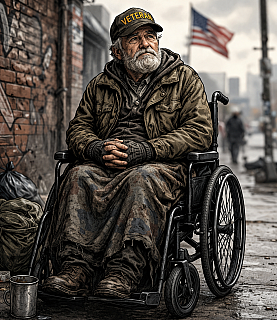
Today about 33,000 veterans are homeless in the United States. Around 60,000 more are at risk of losing their homes after the end of a key foreclosure-prevention program, the Veterans Affairs Servicing Purchase (VASP), introduced under Joe Biden in 2024 and ended by Trump.
And things aren't likely to improve anytime soon with Trump's view of veterans.
Trump once mocked a war hero, POW survivor, and senator John McCain by saying he preferred “people who weren’t captured.” Reports also claimed he privately called fallen soldiers “suckers” and “losers”.
So the contradiction is hard to ignore. Politicians praise the military constantly. The public applauds soldiers at sporting events. But when the cameras turn off and the wars end, too many veterans are left fighting a different battle — for healthcare, housing, respect, and the basic support they were promised when they signed up to serve.
In the end, the pattern is pretty clear: America loves praising veterans but its record of taking care of them is dismal at best.